Papa Johns Turns Customer Pizza Photos Into AI Quality Control
TL;DR
Papa Johns is testing customer photos as a scalable quality control tool, using AI to analyze order-linked images from a rewards-based promotion and flag inconsistent restaurant execution across a franchise network of roughly 6,000 locations.
Key takeaways
- Papa Johns' 'Snap a Pizza, Get a Free Pizza' promotion rewards qualifying digital customers with a free large one-topping pizza on a subsequent order in exchange for a photo and quality feedback.
- CEO Todd Penegor told Reuters the promotion generated thousands of photos during its first few days.
- Customer photos are less accurate than in-store cameras because lighting, angles and delivery conditions vary, so no single image proves an error.
- Because submissions run through Papa Rewards, each image links to a specific order and restaurant, enabling location-level diagnostics.
- Street Fight Magazine flags governance needs: image storage, review access, franchisee appeal rights, and diagnostic rather than disciplinary use.
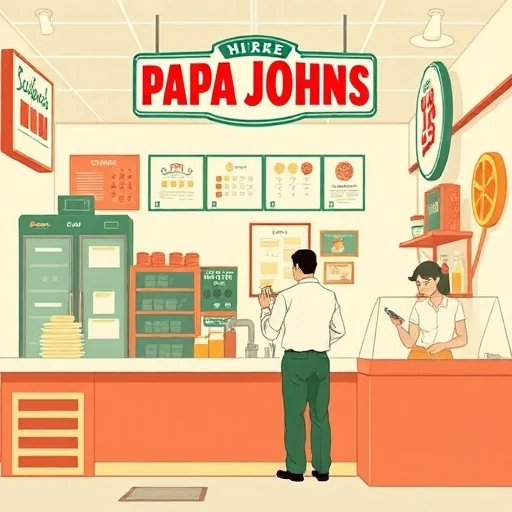
Papa Johns is asking customers to photograph their pizza orders. It is running those images through artificial intelligence to spot quality problems. Street Fight Magazine reported the promotion on November 17, 2026. The experiment treats customer photos as quality control data rather than marketing content. Local businesses and franchise brands could adapt this approach. It would turn everyday feedback into location-level operating intelligence.
Papa Johns’ Snap-a-Pizza Experiment
The promotion is called “Snap a Pizza, Get a Free Pizza.” Customers who place a qualifying digital order can submit a picture of their pizza along with feedback on its crust, bake and overall quality, and qualifying participants receive a free large one-topping pizza on a subsequent order. According to Reuters, CEO Todd Penegor said the promotion generated thousands of photos during its first few days.
The mechanism matters as much as the incentive. Customers access the promotion through their Papa Rewards account, which lets the company connect each image and comment to a specific order and restaurant. That turns customer photos into Quality Control material the brand can analyze, rather than an anonymous social post without operational context.
Scaling Quality Control Beyond In-Store Cameras
Papa Johns already uses AI-enabled cameras inside some restaurants. According to Reuters, that system evaluates characteristics such as the cheese bake, pepperoni cuts and crust shape. But those cameras sit in only a few hundred of the company’s roughly 6,000 restaurants, and equipping every location would mean a much larger investment in hardware, installation and ongoing support.
Customer-submitted images offer a more scalable alternative because customers supply the cameras for free. The trade-off is accuracy: lighting, camera angles, delivery time and customer handling all affect how a pizza appears in a photo, so a customer image cannot automatically prove a restaurant prepared an order incorrectly. Even so, Street Fight Magazine notes that the volume of photos can reveal patterns traditional surveys miss. Examples include repeated complaints about uneven cuts or overbaking at the same location.
Turning Feedback Into Operating Intelligence
Most multi-location brands already collect feedback through surveys, reviews, contact centers and loyalty programs. The hard part is converting that information into signals specific enough to improve execution at a single restaurant. Papa Johns is connecting those pieces. A digital transaction, a rewards-linked submission, an image and a store location all land in a central dashboard. Artificial intelligence there helps flag underperforming restaurants.
That structure creates a feedback loop in which a purchase generates visual data, the data informs location-level improvement, and the free-pizza reward brings the customer back. A transaction now produces both revenue and diagnostic data. The program sits inside Papa Johns’ broader “Unbox Better” strategy. The company says that strategy focuses on product quality, value, restaurant execution and service, and it gives customers a direct role in that effort.
Implications and Governance for Other Brands
Street Fight Magazine notes the model extends beyond restaurants. Home-service companies could analyze photos of completed installations. Automotive networks could document repairs or vehicle condition. Fitness, hospitality and retail brands could evaluate cleanliness, presentation or compliance with location standards. For franchise systems, visual feedback is especially useful because the brand does not directly manage every employee or restaurant.
The governance questions are real. Brands must decide how images are stored, who can review them and whether an AI assessment can influence training, incentives or performance evaluations. Franchisees also need a way to challenge misleading images or account for factors outside their control, such as delivery delays. The strongest initial use is diagnostic, not disciplinary. Customer photos direct attention toward locations that merit closer review. Trained operators and franchise support teams decide the response.
From Quality Control to Reputation Management
Text responses tell a brand what customers think; images show what they actually received. Papa Johns may improve the accuracy of its analysis. Customer photos could then extend quality monitoring to restaurants without dedicated camera systems. They could also help the company prioritize which operational changes deserve attention first.
For other local brands, the opportunity is not simply collecting more content. It is connecting customer photos with transactions, locations and operating workflows so feedback leads to measurable action. Catching recurring problems before they spread into reviews and social conversations turns quality control into a more proactive form of reputation management.
Sources:
Related articles
-
 Microsoft and Salesforce Launch Copilotforce to Bring CRM Data into Copilot Salesforce and Microsoft announced Copilotforce at Microsoft Ignite, bringing CRM data and sales workflows into Copilot, Teams and Fabric. Read article
-
 Understand the Three Types of AI Keyword Output People use AI for keyword research in three different ways, and WordStream's guide distinguishes them sharply. Read article
-
 Google Expands Gemini 4: Search, Carbon Model and Orchestrator Google expands its Gemini 4 family in mid-November with Hydrogen in Search, the Carbon benchmark and the Antigravity Orchestrator. Read article
-
 Brands Slash Content Production Time With Adobe AI Workflows Adobe reports brands including Newell and the NFL cut content production times with Firefly AI workflows, from weeks to minutes, on 12 November 2026. Read article