Driven social: Align schema and Canva workflows for local businesses
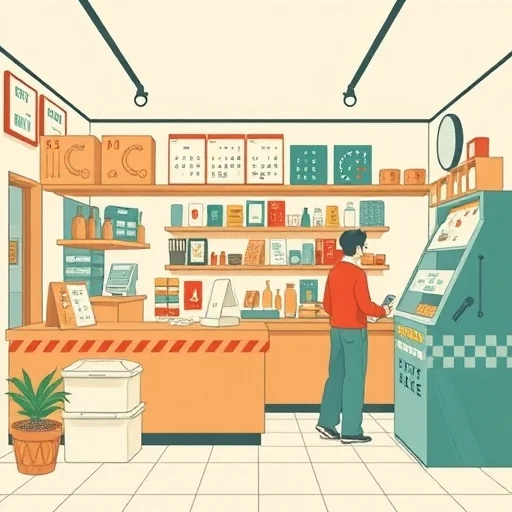
Answer: Local businesses should align machine-readable product and service data with a repeatable Canva-driven social creative pipeline so AI assistants and visual-platform shoppers see the same facts and the same human stories. Local businesses must align data and creative.
The macro-trend of driven social describes discovery and purchase behavior moving inside visual platforms and AI assistants at the same time. Agentic AI, software that acts on users’ behalf to curate, recommend, or even initiate transactions, now scans the open web and structured data to answer queries. Platforms like Instagram, TikTok, and YouTube concentrate discovery through short, authentic visual content. That dual shift forces restaurants, salons, gyms, retailers, and professional services to deliver both clean commerce signals for machines and consistent human-generated creative for people.
Deliver clean commerce signals for machines and consistent visual stories for people.
To act on driven social, marketers must define measurement terms and set priorities immediately. Zero-click referrals are instances when a search or AI answer satisfies a user without any click through to your site. Measure them via search-console impressions and drops in organic click-through while impressions stay stable. Conversational impressions count the times your business appears inside assistant or chat responses. Measure these through conversational analytics, assistant logs, or third-party monitoring that tracks excerpted snippets. Defining agentic AI, zero-click referrals, and conversational impressions up front lets you instrument the two-sided pipeline that follows.
Two-thirds of holiday shoppers use AI, Attentive’s finding requires immediate schema and pricing hygiene
Answer: Attentive’s research, as reported by Retail Dive on August 4, 2026, found that roughly two out of three holiday shoppers consult AI tools to sift products and hunt bargains. Local businesses must publish accurate prices, availability, and ratings in machine-readable formats so generative assistants surface correct offers. Publish accurate prices and availability in machine-readable formats.
Attentive is a mobile messaging and commerce company; its customer research showed that about two-thirds of holiday shoppers will use AI during the buying process. For local businesses, this elevates SKU- and service-level accuracy from nice-to-have to essential. AI agents prefer explicit fields such as priceCurrency, price, sku, availability (schema.org/InStock or OutOfStock), aggregateRating with ratingValue and reviewCount, and time-bounded offers with validFrom and validThrough. If your menu, service list, or product pages omit these fields or publish inconsistent prices across channels, AI summarizers may exclude or misrepresent your business.
Practical steps: embed JSON-LD Product or Service schema on key pages, and ensure booking widgets expose availability in machine-readable formats. Example JSON-LD for a holiday package should include sku, price, availability, aggregateRating, and offers.validFrom/validThrough. Measure change by comparing search-console answer-card impressions and organic click-through rates before and after publishing schema. Create a GA4 event to track referral-less conversions. For example, fire an event named “assistant_impression” when you detect an assistant attribution from server logs. Then monitor sessions with no referrer but high conversion probability.
A Canva workflow and UGC build trust on visual platforms where discovery is concentrated
Answer: Sprout Social’s guidance and 2026 research show that human-generated content is consumers’ top priority on social. Local businesses should use a saved brand kit and a 3×3 Canva grid to scale user-generated content that matches the factual data agents will cite. Scale UGC with a repeatable Canva workflow.
Sprout Social profiles Lucy & Yak (UK apparel) and Go-To Skincare (Australia) as examples of feeds that use a consistent color palette and heavy UGC to build trust without studio budgets. Sprout notes that more than 60% of product discovery now happens on TikTok, Instagram, and YouTube. Its recommended workflow is simple. Save a brand kit in Canva with colors, fonts, and logos. Design repeatable templates, for example a 3×3 grid to keep nine posts visually cohesive. Use Sprout’s Canva integration to import designs directly into the scheduler and reduce the download/upload loop. That integration is per-user and available on Sprout Social Essentials and higher tiers.
Tactical details matter. Prioritize customer-shot product photos and short-form videos because Sprout’s research and SmallBizTrends data converge on consumer preference. Forty-six percent of consumers prefer short-form video for product discovery, and 58% say they purchased after seeing products on social. For local businesses, a weekly cadence of mixed UGC and short educational clips increases discovery and conversion. Use platform-native attribution (Instagram Checkout/TikTok Shop) plus UTM-tagged posts to measure social direct conversions. Sample UTM string for a promotional post: ?utm_source=instagram&utm_medium=social&utm_campaign=holiday_bundle_2026&utm_content=ugc_video. In GA4, compare conversions by source/medium and create an exploration filtered to session_source = ‘instagram’ and page_location contains ‘holiday-bundle’ to validate social-driven sales.
Agentic AI, mobile dominance, and social commerce force payment, personalization and transparency upgrades
Answer: SmallBizTrends’ “10 Key Trends in Digital Commerce USA” reports that 30%–45% of consumers use generative AI for product research. The report also projects that mobile shopping will account for roughly 70% of retail orders by 2026. Finally, 44% of Gen Z buy directly on social. These shifts compel local businesses to improve personalization, mobile checkout speed, and transparent claims. Optimize checkout flows for mobile and BNPL support.
SmallBizTrends defines agentic AI as systems that act for the user, curating options and making recommendations. Those systems sometimes initiate purchases with minimal prompts. When 30%–45% of consumers use generative AI for product research, your FAQ pages and product descriptions must be written as clear questions and answers. Mark those pages up with FAQPage schema so agents can surface concise, accurate answers. The mobile projection, roughly 70% of retail orders by 2026, means checkout flows must be optimized for small screens. Provide saved-payment options and support Buy Now, Pay Later to match consumer expectations.
Social commerce metrics reinforce the need for short, discovery-oriented creative and measurement. SmallBizTrends cites that 44% of Gen Z have made purchases directly on social platforms. It also reports that 49% of Gen Z product discovery happens on TikTok and that 58% of shoppers have bought after seeing a product on social. Those figures support linking your Canva-driven creative pipeline directly to in-app checkout options. Publish machine-readable claims about sustainability and returns so agentic assistants can compare ethical attributes across competitors.
A simple local case example: a neighborhood bakery published a holiday cookie bundle page with JSON-LD Product schema. The schema included priceCurrency, price, sku, availability, aggregateRating (ratingValue 4.8, reviewCount 120), and offers.validFrom/validThrough. The bakery simultaneously ran a UGC-driven Instagram campaign created in Canva and scheduled through Sprout. Within two weeks the bakery saw a measurable increase in Instagram-origin conversions tracked with a UTM campaign. Google Search Console also showed new answer-card impressions for “holiday cookie bundle near me” without a commensurate drop in impressions. This pattern indicated more zero-click visibility alongside social-driven purchases. Structured data drove zero-click visibility and sales.
Bridging the human and machine sides is both a challenge and the main opportunity. Consistent, accurate structured data reduces the risk of AI misrepresentation. Consistent, authentic visual creative increases engagement where discovery happens. Use UGC to build trust and schema to ensure agents deliver the right facts.
Driven social requires a small but disciplined measurement and content pipeline
Answer: Build a tight weekly routine where each social asset has a matching schema-enhanced page entry and tracked links. Measure performance across zero-click impressions, conversational impressions, and social direct conversions. Match each social asset with schema-enhanced page.
Operational checklist:
- Author product or service JSON-LD including sku, price, availability, aggregateRating, and offers windows.
- Design a 3×3 Canva grid using a saved brand kit. Prioritize customer-shot short videos.
- Import designs to your scheduler and tag posts with UTMs like ?utm_source=instagram&utm_campaign=holiday_bundle_2026.
- In GA4, create explorations that filter by UTM campaign and session_source to map social posts to transactions.
- Monitor Google Search Console for answer-card impressions and track conversational impressions via any available assistant analytics or third-party monitoring.
Outlook and next steps
Taken together, the three sources form a clear operational mandate for local businesses. Publish machine-readable, accurate commerce data because about two-thirds of holiday shoppers consult AI and because 30%–45% of consumers use generative AI for product research. At the same time, scale authentic Canva-driven creative and UGC because more than 60% of product discovery now occurs on TikTok, Instagram, and YouTube and consumers prefer human-generated content. The metrics are measurable. Expect roughly 70% mobile orders by 2026, 44% of Gen Z buying on social, and 58% of shoppers purchasing after seeing products on social. These figures make integration both mission-critical and trackable. Start with one product and iterate quickly.
Forward-looking insight: businesses that make driven social repeatable will convert the coming wave of assistant-driven discovery into sustainable revenue. Start with one product or service, publish accurate JSON-LD, run a one-week Canva to scheduler UGC test, and measure both conversational impressions and social-origin conversions. Iterate from that single closed loop and scale the workflow across your offerings.
Sources:
Related articles
-
 Digital Trend Natale 2025: come stanno cambiando la comunicazione delle feste The introduction shows how to convert online interest into bookings, calls, or foot traffic by applying the Digital Trend Natale signals to local marketing. Read article
 -
 Comunicazione visiva 2026: what changes for brands that want to be noticed The phrase comunicazione visiva 2026 captures the need to plan visuals with strategic intent rather than rapid volume. Read article
 -
 Google Pixel 11 Pilot Guide for Small Businesses: Watch, Tag, Tensor How Pixel 11 phones, the Tensor G6 chip, the Pixel Watch and the Pixel Tag turn into a 30-day pilot with real KPIs for a restaurant, salon, gym or shop. Read article
 -
 Accelerate small content workflows into a one-day production loop This article will show how to accelerate small content workflows into a single-day production loop. Read article