AI Visibility for SMEs: How to Monitor It for Multi-Channel Campaigns
Discover how to monitor AI visibility for SMEs and improve multi-channel campaigns with practical metrics and reliable tools.
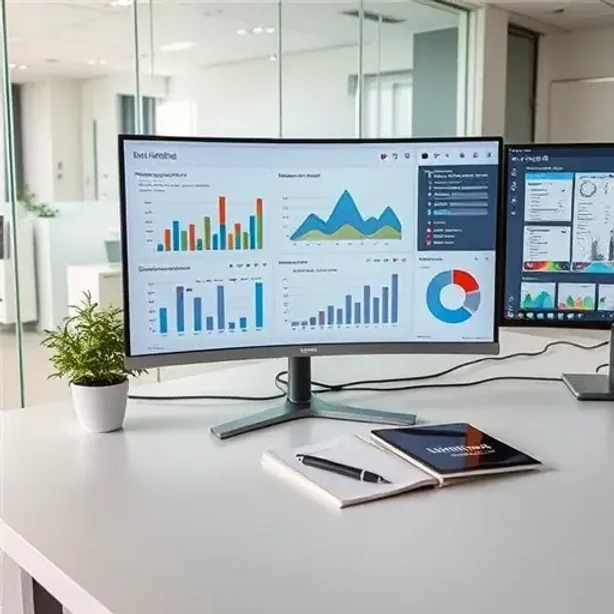
AI visibility for SMEs has become a key variable for local growth, especially when coordinating campaigns across Meta, Instagram, Facebook, TikTok, and Google/YouTube. Many companies aren’t clear how visible they really are in AI responses. This article proposes a practical approach to monitor it without needing an entire team. With targeted management, the right tools provide useful insights to optimize budget and creative output.
Why AI visibility is crucial for SMEs
There are several reasons why AI visibility should not be overlooked:
- Competition is cited while you remain invisible: while traditional SEO is the focus, competitors that understand AI visibility gain mentions in AI responses.
- High-intent traffic is being lost: AI search users aren’t browsing casually; they seek answers and concrete solutions, and if your brand isn’t part of the conversation you miss valuable traffic.
- Brand information spreads inaccurately without control: AI sometimes reproduce outdated or incorrect data; without monitoring you won’t know when this happens to a broad audience.
- You can’t optimize what you don’t measure: the content strategy may be misaligned with AI discovery; monitoring is essential to guide production.
- The gap widens every day: ignoring AI visibility lets competitors advance in this channel; early visibility messages become hard to beat later.
SparkToro research shows that asking the same question 100 times to AI tools yields nearly 100 different brand lists: individual rankings are random, but visibility across thousands of prompts is meaningful.
This means you need to track thousands of prompts to obtain a reliable view of your brand’s visibility.
How to monitor AI visibility?
Effective management relies on tracking visibility trends rather than single rankings per individual query. The SparkToro research justifies this approach: accuracy increases when you observe visibility across multiple prompts.
For SMEs, Semrush’s AI Visibility Toolkit is a recent solution that allows you to monitor visibility across the leading AI platforms. Our prompt database counts over 239 million queries, providing reliable data on two key metrics:
- AI Visibility score: shows how often the brand appears in AI responses relative to competitors, on a 0 to 100 scale.
- Mentions: counts how often the brand appears in AI-generated responses to user queries.
- Cited pages: monitors how many pages on your site are cited or referred to in AI responses.
If you don’t have aggregated data, you risk interpreting isolated examples. Reliable visibility requires analysis across thousands of prompts.
What tools to use to start without breaking the bank?
What free or starter tools to try?
You can test Semrush’s AI Visibility Toolkit, Otterly AI, Peec AI, Nightwatch, and AI Search Watcher for monitoring visibility at no upfront cost.
Here’s what each tool offers:
- Semrush AI Visibility Toolkit: a 7-day trial to track your brand across AI assistants, analyze sentiment and accuracy, and benchmark against competitors.
- Otterly AI: a 14-day trial to monitor brand mentions and share of voice in searches and AI assistants.
- Peec AI: a limited free trial with key visibility tracking and monitoring of how assistants cite your brand.
- Nightwatch: a 14-day trial with AI visibility tracking integrated with traditional SEO tracking.
- AI Search Watcher: a free plan for basic tracking on AI search platforms.
If you have a limited budget or are looking for simple ways to get started, these options help you understand where your brand stands in AI, with no upfront commitments.
How to correct outdated, missing, or incorrect information about your brand
Understanding whether AI platforms are spreading incorrect data about your brand is crucial. Follow these steps to correct outdated or inaccurate information:
- Find where the information comes from: the information may come from your website, social profiles, business listings, or external content. Identifying the cited sources is the first step to correcting them.
- Correct it yourself first: ensure that your website, social profiles, and listings have accurate and up-to-date information.
- Publish missing content on your site: if the correct information isn’t present, create a dedicated page that clearly describes it; for example, a comparison page if your products have important differences.
- Ask external sources to correct them: contact third-party sites that report incorrect data and request updates; it can take time, but it’s essential for your reputation.
Getting started with AI visibility monitoring using Semrush
AI is becoming a key source of discovery for customers. Those who adapt first will have a competitive edge. Yet you can’t optimize your presence if you don’t know how AI cites and describes your brand, or how your content performs in responses. The AI Visibility Toolkit offers tools to monitor your brand’s presence on ChatGPT, Google, and other major platforms.
Start with a 7-day trial to see exactly where your brand stands in the AI era.
Related articles
-
 Digital Trend Natale 2025: come stanno cambiando la comunicazione delle feste The introduction shows how to convert online interest into bookings, calls, or foot traffic by applying the Digital Trend Natale signals to local marketing. Read article
 -
 Comunicazione visiva 2026: what changes for brands that want to be noticed The phrase comunicazione visiva 2026 captures the need to plan visuals with strategic intent rather than rapid volume. Read article
 -
 Google Pixel 11 Pilot Guide for Small Businesses: Watch, Tag, Tensor How Pixel 11 phones, the Tensor G6 chip, the Pixel Watch and the Pixel Tag turn into a 30-day pilot with real KPIs for a restaurant, salon, gym or shop. Read article
 -
 Accelerate small content workflows into a one-day production loop This article will show how to accelerate small content workflows into a single-day production loop. Read article