September LinkedIn Playbook for Local B2B Lead Generation
TL;DR
Use September’s observances to make LinkedIn ads more relevant: choose capture-focused formats, model CPL against benchmarks, follow up within 24 hours tied to the event, and run controlled creative tests before scaling.
Key takeaways
- Map ads to specific September observances to increase relevance and reduce wasted impressions.
- Use Document Ads and Lead Gen Forms to capture contacts inside LinkedIn and reduce follow-up lag.
- Model CPL before spending: CPL = cost per click ÷ conversion rate; compare to LinkedIn band (20–100 €).
- Follow up within 24 hours with calendar-tied messaging to convert leads to appointments.
- Run at least three creative variants per auction batch and monitor fatigue before scaling.
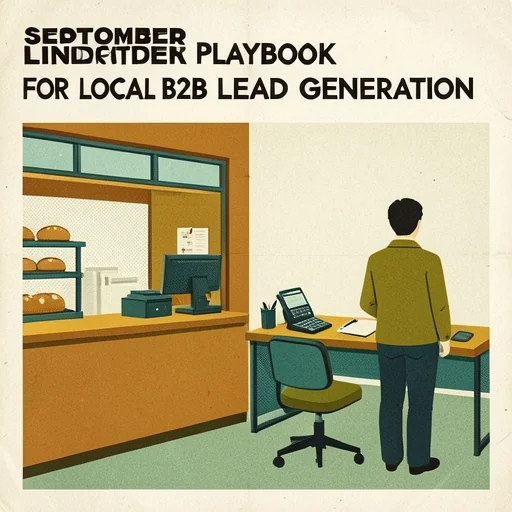
September feels like a second new year for local businesses. People reset habits, inboxes refill, and calendars open for appointments and partnerships. September LinkedIn moments, paired with LinkedIn Ads benchmarks, can generate qualified B2B leads for restaurants, salons, bakeries, fitness studios and professional services. The right formats, a few clear metrics and worked numeric examples let you model cost per lead and judge whether a September push adds revenue.
How september linkedin moments reshape creative and targeting
September hosts repeatable observances that increase relevance when you use them in ads. One Human Family Day on September 12 and Positive Thinking Day on September 13 let a local law office or a coach pitch a short audit or a motivation session with a tight audience. Local observances give precise timing and relevance for offers. LinkedIn lets you target by role, company and seniority. Use that precision to keep irrelevant impressions down and to protect the higher cost of the platform. CPM is cost per thousand impressions, the price to show an ad to 1,000 people. CTR is click-through rate, the share of impressions that produce a click. In Italy the median CPM sits near 28 €, that is the typical cost to reach 1,000 professional impressions on many campaigns. Thought Leader Ads can lift CTR while lowering friction if you sponsor a named person.
Tie creative to the calendar so the message feels timely. National Hispanic Heritage Month from September 15 to October 15, National Working Parents Day on September 16 and National Read a Book Day give different hooks for different audiences. A bilingual checklist delivered with a Document Ad during National Hispanic Heritage Month keeps the download and the capture inside LinkedIn and reduces follow-up lag for your small business.
Ads tied to real calendar events increase relevance and response.
Budget, formats and the math local businesses must run
LinkedIn enforces a technical minimum near 9 € per day for a campaign. A steady monthly program often runs between 1,500 € and 5,000 € to produce continuous B2B lead flow. Single-image ads build awareness. Document Ads and Lead Gen Forms capture contacts inside the platform. Thought Leader Ads promote posts from named people to build credibility. Lead Gen Forms convert at 6–12%, which is roughly double the rate of a typical landing page.
Model the unit economics before you launch. If your campaign averages 4 € per click and your Lead Gen Form converts at 6%, then CPL is about 67 €, which is 4 € divided by 0.06. If your campaign averages 8 € per click and conversion is 12%, then CPL is about 67 € as well, which is 8 € divided by 0.12. Compare those CPLs to the typical LinkedIn CPL band of 20–100 € to see if your offer and funnel are realistic.
Link cost modeling to return expectations. LinkedIn reports a ROAS of 121%, that is €1.21 returned for every €1 spent among advertisers who provided data. If your average customer value and close rate produce less than that return after ad and fulfilment costs, tighten targeting or swap to more efficient formats like Thought Leader Ads or Document Ads.
Estimate your CPL before you commit spend.
Calendar-first follow-up and Calendar Plays as operational steps
Calendar-first follow-up is the rule that creative and contact cadence start from the calendar event you used in the ad. Practically, that means your email, phone outreach and booking flows mention the date or observance and arrive within 24 hours of the captured contact. This fast, framed follow-up turns a time-limited offer into urgency and increases conversion from lead to appointment for small local operators.
Calendar Plays are repeatable creative templates tied to observances. Examples include a “September tasting” for a restaurant around the autumnal equinox or a “Back-to-Work audit” for a consultancy during National Self-Improvement Month. Use Document Ads to deliver the asset and Lead Gen Forms to collect data so the value exchange is clear. Then exclude existing customers and irrelevant job titles to stop paying for clicks that will never convert.
Keep follow-up human and measurable. For a gym or a salon, a phone call within 24 hours after a Lead Gen Form often converts a captured contact into an appointment. Track lead-to-customer conversion inside 30 days to judge whether the September campaign improved margin or only increased volume. If your conversion path is too slow, shorten it and test again.
Fast, framed follow-up improves conversion to appointment.
What to test in September and what changes next
Run at least three creative variants per auction batch and rotate them across a two-week window that brackets the event date. Test formats against each other: Document Ads plus Lead Gen Forms for direct capture, Thought Leader Ads for credibility, and video for seasonal menus or class demos. For local search lift, update your Google Business profile in tandem with LinkedIn ads to catch people who move or search after Labor Day and the first of the month.
If your September campaigns hit CPL targets and approach or exceed a 121% ROAS, scale audiences slowly and repeat the calendar play next cycle. If they miss thresholds, tighten audience filters, switch single-image ads for Thought Leader Ads, and shorten your calendar-first follow-up. The open question is how many Calendar Plays you can run before creative fatigue sets in. Use September as a practical lab to measure that limit. Test frequency, track response decay, and refine a repeatable autumn playbook for local B2B lead generation.
Treat September as a testing window to build a repeatable playbook.
Outlook and next steps
September offers repeatable hooks and measurable formats for local B2B lead generation. Use tight targeting, calendar-tied creative, and fast follow-up to turn interest into appointments. Model cost per lead and expected return before committing budgets. Then run controlled tests, measure fatigue, and refine plays for the rest of the autumn.
Repeatable, measurable calendar plays scale local B2B leads.
Sources:
Related articles
-
 Scaling Local Business Marketing Personalization With Automation Localogy's 19 October 2026 guide shows how to scale marketing personalization with CRM data, direct mail plus online ads and automated follow-up triggers. Read article
-
 John Jantsch's Four-Part System for Local Lead Generation He calls the move from rented attention to owned channels the essence of the Local Lead strategy. Suppose your biggest lead source disappeared tomorrow. Read article
-
 Agentic marketing: turning local signals into funded media actions Corporate teams can maintain brand standards while local teams contribute first-mover signals, and execution can become selective instead of standardized. Read article
-
 TikTok algorithm: 6-step plan to boost local business reach The TikTok algorithm decides who sees each video and, for a local business, it can drive foot traffic, calls, bookings, and online sales with a single post. Read article