Local businesses: Fresh inventory and agentic AI with human checks
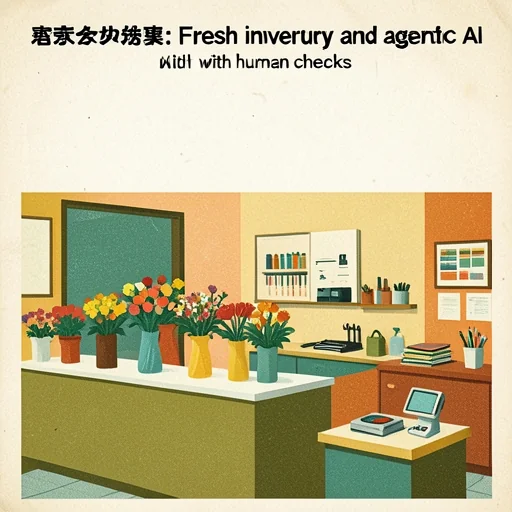
Local businesses face a choice: use fresh merchandise and dependable sourcing while adopting agentic AI that helps shoppers, not replaces staff. Local businesses means neighborhood retailers, restaurants, salons, gyms and professional services that run targeted ads and rely on store visits. This article traces how Target’s emphasis on new items, Bealls’ plan to open 13 locations in six states and expand its New York City buying office, and a survey showing shoppers warming to agentic AI but wanting a human step combine into a practical playbook.
Why fresh product and tight supply amplify paid social
Paid social means paid ads on platforms like Meta and TikTok that drive discovery for a local offer. Target is making a majority of its 2026 Halloween assortment new, that is fresh product rather than carryover, and that creates a clear marketing claim you can use in paid social. Newness gives creatives a factual hook and raises click-to-store relevance, which is the chance an ad will send a nearby customer into a physical location to buy the item shown. Fresh product increases click-to-store relevance.
Bealls plans to open 13 locations in six states this fall and has expanded its New York City buying office, moves that improve sourcing and permit local allocation. For a neighborhood clothing shop or a bakery, that means you can promise a single SKU will be on the shelf because sourcing is coordinated. When stock is reliable, ads that call out “new” or “limited run” will convert better. Reliable stock lets ads convert better.
Treat agentic AI as a discovery engine for local businesses
Agentic AI refers to software that can act on a shopper’s behalf to search and buy products. A survey finds shoppers are warming to that idea, but they still prefer a human checkpoint before final purchase. The survey shows people will let AI suggest items and compare options. Many people want a human confirmation step such as a call, chat or in-person pickup. That split changes how small operations should deploy AI-driven leads, which are prospects generated or assisted by AI. Shoppers want human confirmation before final purchase.
Use AI to propose options, and require a staff confirmation before finalizing payment or pickup.
Target’s hire of Chandhu Nair as its first chief artificial intelligence officer is notable. He comes from Lowe’s and stresses collaboration and user experience. This hire signals that large retailers expect staff and AI to work together. Local teams can mirror that approach. Assign an associate to confirm AI recommendations. Adjust availability using a local inventory flag that marks what’s in each store. Close sales with human trust.
Two-step workflow: market fresh, confirm with a person
Step one is campaign execution. Promote one genuine new item with precise imagery, a store-level call to action and paid social copy that highlights scarcity and pickup. Use the buying lesson from Bealls’ expansion to secure small-batch supply and set a local inventory flag so ads never promise what you cannot deliver. Step two is fulfillment and reassurance. Let agentic AI surface matches, then require a staff confirmation step before finalizing payment or pickup to honor the survey’s preference for human oversight. Use a two-step human-confirmed AI workflow.
What changes next is the pace at which shoppers accept fully autonomous buying and the speed local businesses can build sourcing discipline, staff roles and inventory signals to capture AI-driven intent.
Sources:
Related articles
- Local marketing: How CKE and Scorpion turn Demand Gen into visits Scorpion pairs Demand Gen with AI Max, Broad Match, and Smart Bidding. Read article
-
 Local search: Measure AI scrapes, social signals, and automation Local search is changing, and this article explains what small businesses and their marketers must measure, automate, and control. Read article
 -
 Online Reputation for Local Businesses: Social, Analytics, Reviews Reviews are trust currency: link social listening, store analytics and review replies into one loop, with a 24-hour reply and 48-hour request rhythm. Read article
 -
 Local business pilot: combine AI content, robots, and edge compute One location, one calendar, one set of KPIs: how to pilot AI content, robot helpers and edge compute together before rolling any of them out. Read article