Local business pilot: combine AI content, robots, and edge compute
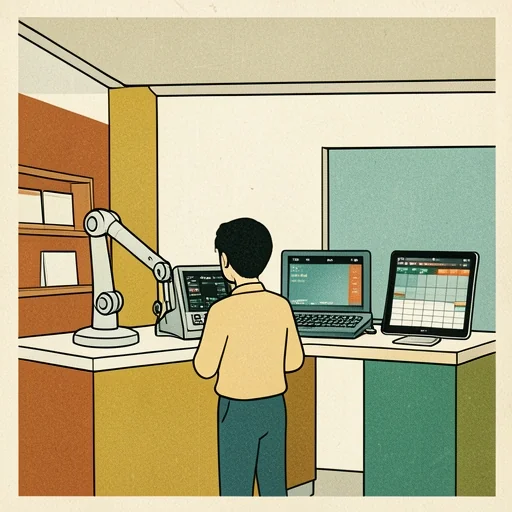
Local business owners need a clear how-to for combining automated content, robotic helpers, and faster edge hardware into a single pilot that produces measurable results. This article shows how to run a controlled pilot that ties Vendasta’s AI Social Media Manager and AI Blogger, Google’s Gemini Robotics ER 2 robot brain, and Intel’s advanced packaging of chiplets into one calendar, one location, and one set of KPIs.
When content calendars and robots must speak the same language for a local business
Start with a single calendar that becomes the source of truth for offers, scripts, and posts. Vendasta’s AI agents train on your service catalog, website, and geographic context so they can publish a weekly FAQ-style blog to WordPress and schedule snackable social posts automatically. Vendasta reports 600 SMBs, that is 600 small and medium businesses, activated those agents in two weeks. Configure the robot to fetch the live blog feed and present the same promotion at a kiosk, on a delivery robot, or online. Have the robot show the message on screen and speak it in a robot voice.
Keep the calendar tight and measurable. A practical sample is three social posts per week, one FAQ blog on WordPress every week, and syndication to the Google Business profile. Tie each published item to a dated entry so you can trace which content moved foot traffic. Measure how often robots refer to the live blog and how many customer interactions use the blog as a reference. Consistent messaging reduces staff confusion during peak hours and creates an audit trail for promotions.
Use one shared content calendar as the single source of truth.
How to build a pilot that proves content, robots, and edge compute work together
Run the pilot at one location with one Vendasta content agent and one robot task. The robot task can be a kiosk greeting or a delivery route that announces specials. Use a robot checklist: confirm daily Wi-Fi, verify the live feed of the weekly blog, run a five-minute safety path test, and require one human override within two minutes of any stall. Track these KPIs: reclaimed marketing hours per week (target 5–10 hours), task completion error rate (acceptable threshold 5% or lower), and customer interactions where the robot cites the blog (target 20 interactions per week). Aim to keep the pilot small so you can learn quickly.
Edge compute matters because it reduces latency and keeps sensitive data local. Intel’s advanced packaging assembles many specialized small chips, called chiplets, into a single package using methods such as Foveros and EMIB. Define Foveros as the technique that stacks chip layers vertically to combine different functions. Define EMIB as an embedded bridge that links separate dies horizontally inside one package. Intel projects packaging capacity could expand by 8 times by 2028. This growth means edge devices will run larger models locally and lower cloud calls and bandwidth costs.
Edge compute reduces latency and keeps sensitive data local.
Risks, rules, and the measurable checklist for scaling
Robots in public spaces need written interventions and staff training before scaling to multiple sites. Define two written scenarios: a robot stall near customers and a content correction that must go live immediately. Add a short privacy checklist: notify on-screen when recording, keep recordings local by default, and request explicit opt-in before uploading audio or video. A sample consent line is: “This kiosk may record audio for service improvement; say ‘I consent’ to allow recording for this visit.” Follow local rules before storing customer audio or video.
Decide scale-up rules with simple data thresholds. Expand only if reclaimed marketing hours reach your target and task completion error rate stays at or below 5%. If customers prefer human help in 30% or more of interactions, pause and adjust the robot script. Make it simple to tweak robot behavior through the available developer tools so you do not need to rebuild hardware. Future packaging work at key fabs may improve device efficiency and battery life, which supports longer on-premises operation.
What changes next will be technical and human. If the pilot hits its KPIs, add multi-location governance and let Vendasta’s one-click mobile approvals maintain brand guardrails across sites. If error rates rise or customers push back, slow the roll-out and increase human oversight. The value of this coordinated stack is not automation for its own sake; it is measurable time reclaimed, clearer customer experience, and the ability to keep more interactions local as chips and robot brains become more capable.
Start with a single measurable pilot at one location.
Sources:
Related articles
- Local marketing: How CKE and Scorpion turn Demand Gen into visits Scorpion pairs Demand Gen with AI Max, Broad Match, and Smart Bidding. Read article
-
 Local search: Measure AI scrapes, social signals, and automation Local search is changing, and this article explains what small businesses and their marketers must measure, automate, and control. Read article
 -
 Online Reputation for Local Businesses: Social, Analytics, Reviews Reviews are trust currency: link social listening, store analytics and review replies into one loop, with a 24-hour reply and 48-hour request rhythm. Read article
 -
 Local businesses: Fresh inventory and agentic AI with human checks Local businesses face a choice: use fresh merchandise and dependable sourcing while adopting agentic AI that helps shoppers, not replaces staff. Read article