Flyer Campaigns Milan Strategies 2026: Costs, Zones and Tactics for Local SMEs
Discover 2026 flyer distribution costs, zones, and tactics in Milan, with GPS, QR codes, and offline-to-online integration for local businesses.
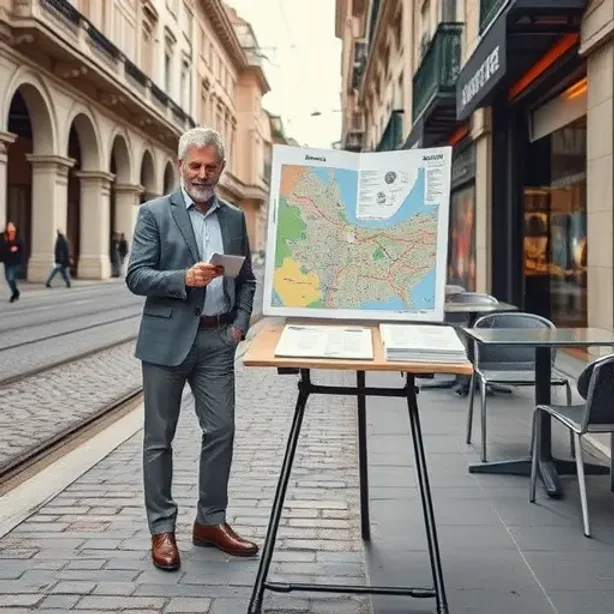
In today’s context, flyer distribution is no longer an isolated operation: to reach local customers you need planning, traceability, and integration with digital channels. In this guide we look at costs, zones, and tactics for 2026, focusing on how to transform offline flyers into real opportunities for SMEs. A data-driven plan allows you to maximize ROI even on traditional channels.
Strategies for Multichannel Local Campaigns
Milan represents a highly competitive market: consumer attention is contested among hundreds of businesses, and a campaign without a strategy risks getting lost in the noise. The key is to start with a territorial analysis to define districts, timing, and targeted messages.
Knowing the districts and the best moments helps concentrate investments where conversion is more likely. This avoids waste and improves message relevance.
Costs and Scales of Flyer Distribution in Milan in 2026
In 2026 flyer distribution costs vary mainly based on quantity, distribution area, and delivery method. The entry-level tier starts from 5,000 door-to-door flyers in a single district, ideal for testing the channel and understanding local market response. The mid tier, with 20,000–30,000 flyers across multiple zones, is the most used by SMEs and franchises operating in several municipalities. The high tier, with 50,000 flyers and more, is typical of mass distribution campaigns with a capillary coverage across all Milanese municipalities and surrounding towns.
These volumes are not just numbers: they describe the ability to test targeted messages in specific urban contexts and to increase the likelihood of actual contact. A well-calibrated campaign is not just about volume: it’s about delivering messages relevant to the target neighborhoods.
The Zones of Milan: Which Areas to Choose for Your Campaign
Milan is divided into nine municipalities, each with different demographic characteristics. Municipality 1 is the historic center with a strong presence of offices and tourism but fewer stable residents. Municipalities 2, 3 and 4 are densely populated by families and young professionals, ideal for residential campaigns. The choice of area should start from where your potential customers live.
Municipalities 6, 7, and 8 have high residential density and a significant presence of families, perfect for campaigns for supermarkets, gyms, and neighborhood services. The best strategy is a targeted mix of residential areas and high-footfall commercial zones.
Door-to-Door or Hand to Hand: What Works in Milan
Door-to-door is the most effective method to reach families directly at home, offering precise geographic coverage by ZIP code, street, and house number. Hand to hand works best in high foot-traffic areas such as Corso Buenos Aires, Navigli, Porta Garibaldi, Piazza Loreto. Direct contact with passersby allows an immediate brand recall and a real connection with the message.
In Milan, the most effective solution is often a blended strategy: door-to-door for residential coverage and hand to hand at high-traffic points.
Distributing Without Data is Wasting Budget
Many companies still rely on operators who distribute without any reporting. No maps, no reports, no proof of delivery. In Milan, where the cost per contact is higher than in other cities, this approach is simply unacceptable. A data-driven distribution campaign avoids waste and enables targeted optimizations for future campaigns.
GPS Tracking: The Difference Between Spending and Investing
With Flyerbox’s certified GPS tracking system, every operator route is logged in real time. You can see exactly which street, at what time, and in which area the flyers were distributed. No more blind trust, but concrete data at campaign end.
Tracking helps identify which neighborhoods respond best to the messages and what times distribution is most effective.
Flyer Campaigns and Digital: The Winning Combination
The flyer still works best when it’s not a standalone tool. A QR code leading to a dedicated offer, a landing page optimized to convert visitors from the flyer, and a digital presence that reinforces the offline message: these elements multiply ROI. Distributing offline and strengthening online significantly increases ROI.
Flyerbox clients who integrate physical distribution with a digital presence achieve significantly higher results than those using a single channel.
How to Choose the Right Partner for Milan
In Milan there are plenty of flyer providers. But the difference between any agency and a strategic partner is measured in three things: knowledge of the territory, certified traceability, and the ability to integrate the physical channel with the digital one. Choosing a partner who knows the territory, offers traceability and digital integration makes the difference.
One reference option is Flyerbox, which operates in Milan and all of Lombardy with certified operators and real-time GPS tracking, offering a 360° approach that combines graphics, printing, distribution, and digital marketing.
Trivia
Milan is the Italian city with the largest number of flyers distributed each year. According to industry estimates, in the metropolitan area more than 200 million pieces are delivered annually across supermarkets, franchises, and local businesses. Yet less than 30% of campaigns use a certified tracking system.
Related articles
-
 AI agents in retail: balancing sales gains with trust and risk Lack of visibility raises the risk of regulated-data exposure. Read article
 -
 Best AI 2026 for Local Businesses: Picks by Task, Cost, Privacy First two sentences outcome: Local businesses and small businesses will know which AI to use this week to improve local marketing, lead capture. Read article
 -
 AI for Small Businesses: Tools to Cut Costs and Grow Revenue Small businesses gain from reduced manual work and clearer renewal workflows that agencies can sell as measurable outcomes. Read article
 -
 Local businesses: secure AI automation to protect brand and customers Local businesses must decide how to let machines help without letting machines take control. Read article