Cross-Channel Local Marketing Visibility
Guide to cross-channel local marketing visibility: discovery, listings, social and AI, plus your site, with practical strategies.
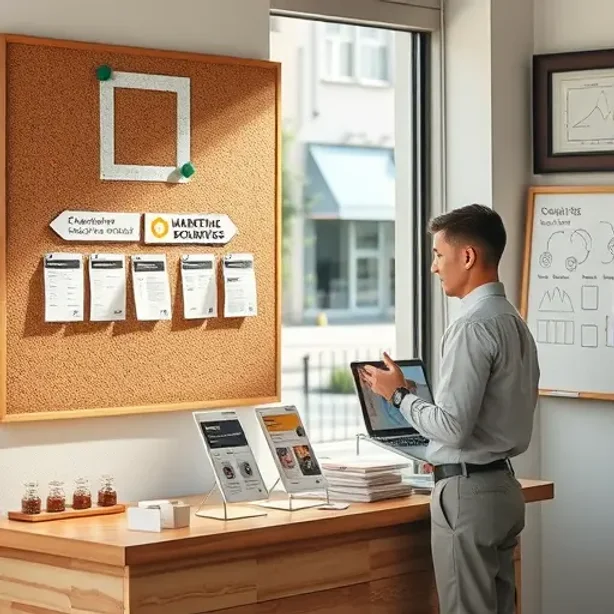
Today consumers discover, evaluate and decide often without visiting the company’s website. The homepage is no longer the center of the digital experience. In many cases searches start on Google, on listings, on social profiles and on AI tools. For a local business to grow, it’s not enough to drive traffic to the website; you need to build a consistent presence across discovery channels where customers actually look for information.
The new visibility architecture starts with updating and aligning information across local listings, directories and social profiles. A successful strategy relies on the consistency of core information such as name, address, phone number, hours and service categories.
Accurate and up-to-date local listings improve immediate visibility and reduce potential customer dissatisfaction. Google Business Profile, Bing Places, Apple Maps, Yelp and industry directories require careful and regular management to remain trustworthy in users’ eyes.
An active presence of reviews and online reputation influences customer trust and decisions. Recent, well-managed reviews can boost CTR in local searches and push potential customers to choose your business over a competitor.
Optimized social profiles act as mini-sites and influence first impressions and reputation. Consistency among content, hours, services offered and prompt responses is crucial to turning engagement into concrete contacts.
Maps and near-me searches represent a critical part of local discovery. Having accurate data in listings and clear categorization improves visibility when users search for nearby services.
Local listings are the first brand experience for many consumers. Maintain consistent data, respond to reviews and update hours to reduce friction and abandonment.
Managing reviews is not just about reputation, but an operational lever: timely responses and clear policies improve engagement and trust across all platforms.
Starting to use AI tools and AI-driven search requires listing information to be accurate and constant. AI responses tend to highlight companies with clear, relevant and up-to-date content across multiple online sources.
The balance between listings, reviews, social and AI
The local listings, reviews, social profiles and AI solutions are not independent elements. They must be integrated into a cross-channel local marketing strategy that:
- Continuously align the core data (NAP) across all channels to avoid inconsistencies that undermine trust and rankings.
- Actively manage reviews to maintain a positive reputation and reduce risks of negative perceptions.
- Optimize social profiles as mini-sites with up-to-date information on services, hours, contacts and local offers.
- Gain visibility in map and near-me searches by presenting clear and complete listings.
This integration enables reaching potential customers across platforms, increasing opportunities for direct contact, bookings or store visits.
Centralizing interactions and data is the key to reducing errors, synchronizing messages and measuring impact across multiple channels. When information, responses and messages come from a single system, it’s easier to maintain consistency and responsiveness across all platforms.
Comparison of Approaches and Practical Scenarios
On one side there are those who rely mainly on the website and paid advertising campaigns, and on the other those who integrate listings, reviews and social as an integral part of the local customer journey. In SME contexts, a strategy that combines both dimensions is often the most effective: the site remains useful, but visibility and engagement develop on discovery channels, maps and review platforms. Benefits include greater reach, direct contacts, bookings and store traffic, but there are also challenges: managing data across multiple platforms, need for automation tools and attention to privacy and consent policies. Operationally, cross-channel strategy requires clear roles, regular data refresh processes and simple metrics to monitor performance on each channel. Some professionals may feel that relying on third-party platforms makes management more complex, others see opportunities to amplify brand presence and reduce customer acquisition costs through a broader funnel and less dependence on the site alone. The balance is in testing and measuring, continually refining actions on listings, reviews, social and AI to drive leads, bookings and real visits. This approach minimizes dependence on a single traffic source and improves the resilience of local online presence, especially in competitive markets where the decision often happens before opening a web page or engaging with traditional campaigns.
Strategic Conclusion: Expanding Local Visibility and Delivering Real Results
For a SME looking to grow with multichannel advertising campaigns, the key is to build a coherent and active presence across local listings, reviews, social and AI tools, integrating these channels into a cross-channel local marketing strategy. This allows you to intercept customers along the entire discovery journey, not only when they search for the company directly. Activities should include regular data updates, proactive review management, care of social profiles and ongoing assessment of impact on metrics such as leads, bookings and store visits.
To deepen, consider testing a mix of channels and tools that best fit your local sector, continuously monitoring conversions and engagement on each channel. A well-executed cross-channel visibility strategy can translate into tangible growth for restaurants, retail, beauty, gyms and local services.
Related articles
-
 AI agents in retail: balancing sales gains with trust and risk Lack of visibility raises the risk of regulated-data exposure. Read article
 -
 Best AI 2026 for Local Businesses: Picks by Task, Cost, Privacy First two sentences outcome: Local businesses and small businesses will know which AI to use this week to improve local marketing, lead capture. Read article
 -
 AI for Small Businesses: Tools to Cut Costs and Grow Revenue Small businesses gain from reduced manual work and clearer renewal workflows that agencies can sell as measurable outcomes. Read article
 -
 Local businesses: secure AI automation to protect brand and customers Local businesses must decide how to let machines help without letting machines take control. Read article