Advertising Campaigns for Local Businesses with CRM
Advertising campaigns for local businesses: use CRM for win-back, testimonials, and customer celebrations to boost conversions.
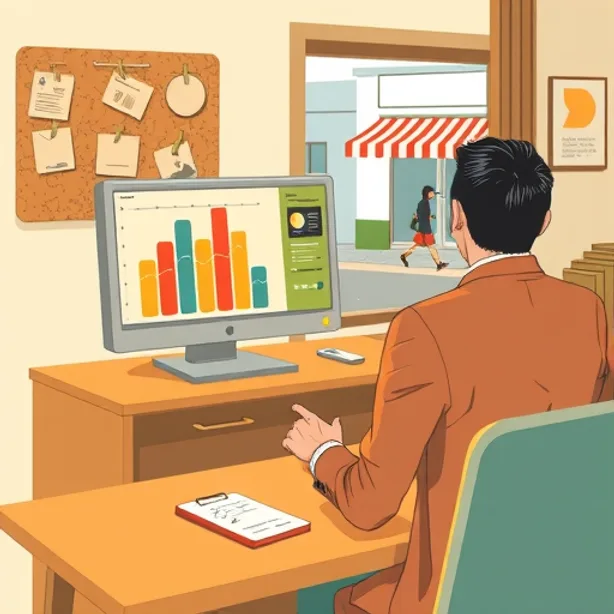
Advertising campaigns for local businesses can arise from data you already collect: purchase history, feedback, and interactions tracked in the CRM guide concrete ideas for multichannel campaigns.
Analyzing the information in the CRM enables transforming behaviors and feedback into relevant, targeted campaigns.
Why the CRM is the foundation of your campaigns
A CRM is not just a contact list: it’s a source of signals about preferences, purchase frequency, sentiment, and customer pain points.
Using these signals to segment your audience reduces waste and increases the relevance of your creatives and calls to action.
Three practical campaigns to launch right away
1. Win-Back Campaign
Identify in the CRM customers who left negative feedback, stopped purchasing, or disengaged from communications; these segments are ideal candidates for a win-back campaign.
Create an automated sequence of emails and messages that acknowledge the problem, outline corrective actions, and offer an incentive to rebuild trust.
Always segment by reason for churn: product, service, or communication issues require different messages.
2. Testimonial Marketing
Gather reviews and success stories in the CRM: even a strong, well-contextualized sentence can sway a purchase decision.
Use selected testimonials to create narrative emails that tell the customer’s problem, the solution, and the result, with a clear CTA.
Always seek permission before publishing a testimonial and keep the consent in the CRM for future reuse.
3. Customer Celebration
The CRM tracks birthdays, purchase anniversaries, and loyalty milestones: these moments are perfect for tagging messages and personalized offers.
Automate sending messages and offers when the customer reaches a milestone to boost engagement and repeat business.
How to set up campaigns in practice
Key steps: segmentation, trend analysis in feedback, creating automated flows, message personalization, and manual follow-up when needed.
Set up precise segments in the CRM, create templates for each segment, and monitor opens, conversions, and responses to optimize content.
- Segment: dissatisfied customers, inactive customers, loyal customers.
- Create targeted content: different messages for each reason for churn or each testimonial.
- Automate: workflows that send emails/SMS based on CRM triggers.
- Monitor: measure opens, clicks, bookings and calls to assess effectiveness.
Integration with advertising channels
You can synchronize CRM segments with advertising platforms (Meta, Google, TikTok) to create customized audiences and lookalike campaigns.
Synchronizing the CRM with advertising tools increases coherence between organic and paid messages, improving performance and ROAS.
Automation and operational follow-up
Don’t rely on automation alone: plan reminders for human follow-up in high-priority cases (complaints, VIPs, hot leads).
Set up automatic tasks in the CRM to remind the team to intervene personally when the situation calls for it.
Critical analysis: limits, risks, and strategic choices
Using CRM as a source for local advertising campaigns offers immediate advantages, but it’s important to also consider limitations. The primary risk is over-reliance on historical data: segments based on past behaviors may miss rapid changes in the local market or new customer habits. Also, many SMEs lack clean data; duplicate records, incomplete information, or untracked consent can compromise messages and compliance. Finally, syncing CRM with advertising platforms requires attention to tracking and privacy: verify consent and adopt solutions like Conversion API or other official integrations to avoid policy and regulation issues.
Assess data quality, regularly refresh segments, and balance automation with human intervention to achieve sustainable results.
Alternative viewpoints
Some experts suggest investing first in creativity and then in data, arguing that strong creative can overcome lacking data; others contend that without segmentation even the best creative loses effectiveness. For local businesses, a hybrid approach often works best: test creative ideas on a broad audience to identify effective messages, then scale with CRM segments to maximize conversions and store visits.
An iterative approach — creative testing, CRM-driven micro-targeting, continuous optimization — offers the best balance between reach and relevance.
Quick operational checklist
Here’s what to do now: clean the CRM data, create priority segments, prepare 3 email templates (win-back, testimonials, celebration), set up automation, and define KPIs.
Implement the checklist in 7 days to have the first campaign cycle active and gather data for optimization.
- Verify and clean the CRM data.
- Create segments (dissatisfied, inactive, loyal).
- Prepare personalized templates and offers.
- Set up automation and integration with advertising platforms.
- Monitoring and manual follow-up for critical cases.
How to measure success
Set clear metrics: email open rate, CTR, conversion rate on landing pages, number of bookings or calls generated, and increase in store visits.
Monitor metrics both short-term (opens, clicks) and long-term (repeat purchases, CLV) to understand the true impact of the campaigns.
Recommended next steps
Start with a pilot test on a limited segment, measure results, and scale gradually. Plan creative experiments and A/B tests to optimize messages and offers.
A continuous cycle of testing, analysis, and optimization turns CRM data into more effective and measurable advertising campaigns for local businesses.
Practical value for your business
With a few steps you can turn existing data into campaigns that generate leads, bookings, and store visits, improving retention and ROI.
Investing time in CRM and automation is a tangible lever to improve the marketing performance of local SMEs.
Easy next steps
If you don’t have a plan yet: pick a segment, write 3 distinct messages, automate the sending, and measure for 30 days.
A quick 30-day test provides practical insights into what works and where to focus your advertising budget.
Related articles
-
 Most Downloaded Apps 2026: Channels Local Businesses Should Prioritize Q: What immediate KPI should local businesses track? Read article
 -
 Local marketing: linking programmatic DOOH to store sales Local marketing has shifted from flyers and signage to coordinated digital paths that end at a street-level door. Read article
 -
 Apple Maps ads and AI demos boost local visits and sales This article looks at Apple Maps ads and AI product demos and explains how small businesses can use both to drive visits and sales. Read article
 -
 Voice AI and Short-Form Video Playbook for Local Businesses Local marketing is splitting its energy between two hard technical problems: producing persuasive short-form video and handling every inbound customer… Read article